
By Daniel March 11, 2026
Increasing e-commerce competition made the checkout process one of the main reasons businesses lost revenue. As we have seen in previous studies, even small delays in entering payment information can significantly impact conversion rates enough to keep your business at risk. This is where Click to Pay can help solve this problem.
Click to Pay is the consumer-facing manifestation of EMV Secure Remote Commerce. The global standard is supported by major card brands (Visa, Mastercard, American Express, and Discover Financial Services) via EMVCo. So, the question becomes, “Is Click to Pay a suitable alternative for your company”
This guide aims to help you understand how Click to Pay works with Digital Wallets, and whether it should form part of your overall strategy to improve checkout.
What Is Click to Pay?
The consumer-centric Click to Pay is known worldwide as EMV Secure Remote Commerce (SRC), which is a global standard created and maintained by EMVCo.
Understanding EMV Secure Remote Commerce (SRC)
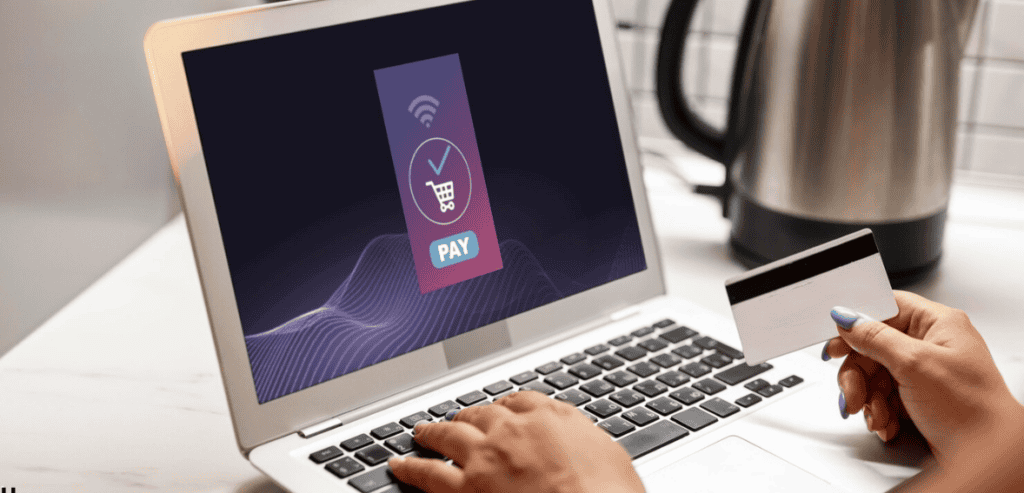
A single checkout system for all card purchases made online, EMVCo, and the card networks have created EMV Secure Remote Commerce (SRC). It is a common standard between merchants and card networks through the development of the EMV Secure Remote Commerce (SRC) standard. Features of this technology include:
- Securely storing your card through network tokenization
- Unified branding for checkouts across all card networks (e.g., Visa, Mastercard, AMEX)
- Fewer steps in the checkout process
- Support for strong consumer authentication (including 3-D Secure)
- Compatible with all participating issuers and merchants
Using a click-to-pay solution allows a consumer to pay for a purchase made via e-commerce using a credit or debit card without downloading a separate digital wallet app.
How Click to Pay Works at Checkout?
At a high-level, Click-to-Pay Checkout (CCP) offers a secure identity-based payment experience without requiring the user to enter card information. The process typically looks as follows:
- Customer clicks on the CCP button upon checkout.
- They verify their identity via email/phone.
- Once verified, their card credentials are retrieved from storage.
- The customer then selects a card and approves payment.
Tokenized card credentials are then securely sent to the merchant. Behind the scenes:
- Card data is tokenized at the network level.
- Sensitive data is never exposed to the merchant directly.
- Risk-based security may be used for authentication.
This standard process is what differentiates EMV Secure Remote Commerce (SRC) from wallets that use proprietary methods.
Why Click to Pay Matters for Checkout Optimization?
Optimizing the e-commerce checkout experience directly impacts revenue, authorization rates, and customer retention.
1. Reduce Cart Abandonment Payments
E-commerce websites experience their highest level of consumer resistance through manual card entry, which creates difficulties for customers. Mobile users experience problems because they need to enter 16-digit card numbers, which results in:
- User frustration
- Entry errors
- Drop-offs
Industry studies consistently show cart abandonment rates exceeding 65–70% globally, with complicated checkout flows cited as a primary reason. The payment stage requires reduced friction because it leads to increased conversions, which experience maximum drop-off during manual card entry.
2. Support Broader Payment Method Diversity
Modern checkout optimization payment methods require offering multiple options:
- Traditional card entry
- Digital wallets
- Buy Now Pay Later
- Network tokenized solutions
The card-based checkout system receives better support from click-to-pay, which maintains the existing payment methods.
3. Improve Mobile Conversion
Mobile devices handle most of the traffic that goes to e-commerce websites. Form-based checkout systems become less effective when users work with smaller screen displays. Click to pay checkout needs fewer taps and keystrokes, which leads to lower demands and better mobile conversion results.
Click to Pay vs Apple Pay vs Google Pay

Common questions often include: What do click to pay, Apple Pay, and Google Pay have in common? Let’s look at differences.
- Apple Pay
Apple Pay uses the same platform on both iOS mobile devices and Mac computer operating systems. Key features include:
- Use only Apple products
- Authenticated with facial recognition or fingerprint-based technology.
- Transactions are tokenized (and therefore secure).
- Excellent user experience on Apple devices.
- Limited by the type of product and browser being used.
- Google Pay
Google Pay functions on both Android devices and Chrome web browsers. Main features of the system include:
- The system provides support for all Android devices through its broad ecosystem capabilities.
- The system uses tokenization.
- It requires users to link their Google accounts for authentication purposes.
- The system provides extensive Android support as its main strength.
This functions as the main restriction because it does not support all available platforms.
- Click to Pay (EMV SRC)
Click to Pay has major differences from Card Networks (Powered by EMV Secure Remote Commerce – SRC):
- Not specific to any one device
- Standardized across card networks
- Browser-based
- Doesn’t require a separate wallet app
Strength = Cross network – Interoperability
Weakness = consumer awareness is still growing.
Quick Comparison Table
| Feature | Click to Pay | Apple Pay | Google Pay |
| Standardized by EMVCo | Yes | No | No |
| Device-specific | No | Yes | Mostly |
| Requires a wallet app | No | Yes | Yes |
| Tokenization | Yes | Yes | Yes |
| Works with major card networks | Yes | Yes | Yes |
Click to Pay, Apple Pay, and Android Pay have one primary difference: each one is independent of any given hardware. Using Click to Pay doesn’t require committing to an exclusive version of a product (no exclusive card or device).
Security Architecture of Click to Pay
Security stands as the primary essential element that protects EMV Secure Remote Commerce (SRC). The security system consists of these fundamental elements, which include:
- Network tokenization
- Domain controls
- Risk-based authentication
- The users have the choice to activate 3-D Secure authentication
- The system prohibits merchants from keeping original payment card numbers in their storage systems.
Click to Pay uses network tokenization together with its optional 3-D Secure system, which meets current PCI DSS standards while decreasing merchant risks from storing PAN. The system functions as both a user experience improvement and a compliance-oriented infrastructure choice.
Click to Pay Integration E-commerce: What’s Required?

When considering click-to-pay integration, implementation complexity varies depending on the Payment Stack used. Most merchants use one of three integration paths to integrate with their stack with the help of a Payment Gateway, a Payment Service Provider (PSP), or a Checkout Orchestration Platform.
To activate the requirements needed if the provider consists of EMV Secure Remote Commerce (SRC) are as follows:
- Enable in the dashboard
- Updating UI components of the Checkout
- Adding branding elements for SRC
- Test on all devices
If it is used for direct network integration, this can typically become a little bit more complex with large enterprise businesses.
Preparing for the click-to-pay integration should include the following considerations:
- Current tokenization strategy
- 3DS Configuration
- User Experience at Mobile Checkout
- Fraud Detection Rules
- Analytics Tracking Compatibility
The goal is to ensure that it can be aligned with the entire checkout optimization payment methods strategy. Merchants should evaluate how Click to Pay functions with stored credential systems, which include CIT, MIT, subscription billing methods, and authorization rate optimization programs. The system provides a full solution that works together with existing wallet systems.
When Should Your Store Add Click to Pay?
The answer depends on your business model and traffic profile. You should strongly consider click to pay if:
- The mobile traffic exceeds 50 percent of your total website visitors.
- Your business depends on customers using credit and debit cards for transactions.
- Experiences higher-than-normal cart abandonment rates.
- The company conducts business across multiple countries.
- You require uniform tokenization solutions that do not depend on digital wallets.
You may deprioritize click to pay if:
- Customers mostly prefer to use digital wallet services.
- Your website already achieves high rates of customers completing purchases
- The payment service provider currently lacks support for secure remote commerce.
Most e-commerce stores use multiple payment methods as their fundamental payment system.
Strategic Benefits for E-commerce Teams
The addition of click-to-pay is not only more convenient, but it is also a long-term strategic investment in payment infrastructure.
- Card Payments That Are Built to Last
As regulations change and minimal security standards become more stringent, EMV Secure Remote Commerce (SRC) will significantly enhance the level of security as a global commerce solution.
- Improving Payment Methods
The following will represent the optimal methods for performing a checkout process by the year 2026:
- Wallet
- Network tokenization
- BNPL (Buy Now, Pay Later)
- Card Payment at Checkout
Click to Pay enhances the percentage of card payments processed at Checkout without penalizing you for processing Wallet payment methods.
- Risk Reduction of Operations
A Tokenized Payment Process provides the ability to dramatically reduce the exposure to fraud, as well as reduce the PCI Compliance costs, which maintains raw card information.
Potential Challenges to Consider
No payment method has achieved perfection. Some merchants report the following:
- New customers show low recognition.
- Users experience minor confusion when they encounter unclear branding.
- The system requires active participation from all issuing banks.
However, card networks continue to promote the click-to-pay standard, which leads to growing public awareness.
Best Practices for Implementing Click to Pay
For greatest success:
- Position the click to pay button prominently.
- Avoid cluttering payment method options.
- Include fall-back card entry fields in checkout
- Optimize mobile-first site layout
- A/B to test button placement and prominence.
- After launch, monitor payment conversion metrics at checkout
Note: Click to pay will have its best results when used as part of a larger checkout optimization strategy for payment methods.
Conclusion
The e-commerce market in 2026 operates through three main elements, which include frictionless checkout, advanced fraud controls, and network-level tokenization.
Click to Pay — powered by EMV Secure Remote Commerce (SRC) — bridges the gap between traditional card entry and proprietary digital wallets. The system allows merchants to create smoother payment processes that do not require them to rely on one specific device platform.
For merchants seeking to reduce cart abandonment, improve mobile conversion, and modernize card security infrastructure, Click to Pay represents a strategic enhancement rather than a cosmetic checkout change.
The future of checkout is tokenized, interoperable, and identity-driven. Click to Pay serves as one of the essential elements that create this system.
FAQs
1. Are click-to-pay and digital wallets similar?
No, click to pay utilizes EMV Secure Remote Commerce (SRC) to enable both transactions. This is usable through a merchant’s website without the need for a standalone wallet app to be downloaded.
2. Does using click-to-pay reduce cart abandonment?
Yes, by eliminating the need for manually entering card information, it reduces cart abandonment for all payment types, particularly for mobile-based payments.
3. In comparing click to pay to both Apple Pay and Google Pay, what is the primary differentiating factor?
The primary factor is ecosystem independence. Click to pay operates with the capability of providing checkout capabilities across various devices and browsers without requiring a specific piece of hardware.
4. Is click to pay secure?
Yes, click to pay is secure. It has the same level of security as EMV Secure Remote Commerce (SRC), and uses tokenization, domain controls, and authentication standards, all aligned with EMV SRC.
5. How simple is click-to-pay integration for merchants?
Most merchants can enable click-to-pay with little development effort on the part of the merchant through either the payment gateway or the Payment Service Provider (PSP), depending on existing infrastructure.